
“As an Amazon Associate, I earn from qualifying purchases made on Amazon through links in this website”
The Comprehensive Pharmacognosy, Ethnobotany, and Culinary Science of Anethum graveolens
The botanical entity Anethum graveolens, widely recognized as dill, represents a sophisticated convergence of agricultural tradition, complex secondary metabolism, and therapeutic utility that has spanned over five millennia of human civilization. As an annual herb belonging to the Apiaceae family, its significance extends from Neolithic archaeological sites to contemporary clinical trials investigating endocrine and metabolic modulation.1 The plant serves a dual role in human society: as a primary aromatic component in diverse global cuisines and as a foundational element in traditional medicinal systems, notably Ayurveda and Unani medicine.4 This report provides an exhaustive analysis of Anethum graveolens, examining its taxonomic classification, morphological characteristics, historical trajectory, biochemical constituents, culinary applications, and the evolving landscape of its medicinal evidence.
Taxonomic Classification and Botanical Evolution
Anethum graveolens is the sole species within its genus, although its taxonomic history has been subject to debate, with some botanists previously classifying it under the genus Peucedanum as Peucedanum graveolens.4 Within the broader Apiaceae family, formerly known as the Umbelliferae, dill is closely related to other economically significant plants such as parsley (Petroselinum crispum), celery (Apium graveolens), fennel (Foeniculum vulgare), coriander (Coriandrum sativum), and caraway (Carum carvi).1 The etymological roots of its name reflect the sensory impact of the plant; the genus name “Anethum” is the Latinized form of the Greek “aneeton” or “aneeson,” which means “strong smelling” or “to burn,” likely a reference to the pungent aroma and the slight heat provided by the seeds when consumed.4 The species epithet “graveolens” is a Latin compound meaning “strongly smelling,” further emphasizing its aromatic profile.6
The common name “dill” has distinct linguistic origins that highlight its traditional uses. It is primarily derived from the Old Norse word “dilla,” which means “to soothe” or “to lull”.6 This reflects the plant’s long-standing use as a carminative and sleep aid in Northern European folk medicine. Alternative theories suggest a connection to the German “dolde,” meaning umbel, which refers to the characteristic shape of its inflorescence.8 Two primary commercial species have historically been recognized: the “European” dill, Anethum graveolens L., and the “Indian” dill, Anethum sowa Roxb. ex Flem.4 While Anethum graveolens is primarily grown for its foliage (dill weed), Anethum sowa is prioritized for its fruit (dill seed) in the Indian subcontinent and Southeast Asia.4
Morphological and Anatomical Specifications
Anethum graveolens is characterized by its slender, hollow, and glaucous stems, which typically reach a height of 30 to 150 centimeters (approximately 1 to 5 feet).2 The biomechanical structure of the hollow stem allows the plant to maintain a high degree of flexibility while supporting the weight of the compound umbels during the flowering stage. The leaves are arranged alternately along the stem and are highly divided into fine, filiform segments.1 These ultimate leaf divisions measure approximately 1 to 2 mm in breadth, a key diagnostic feature that distinguishes dill from fennel (Foeniculum vulgare), which possesses even finer, threadlike leaves generally less than 1 mm broad.1
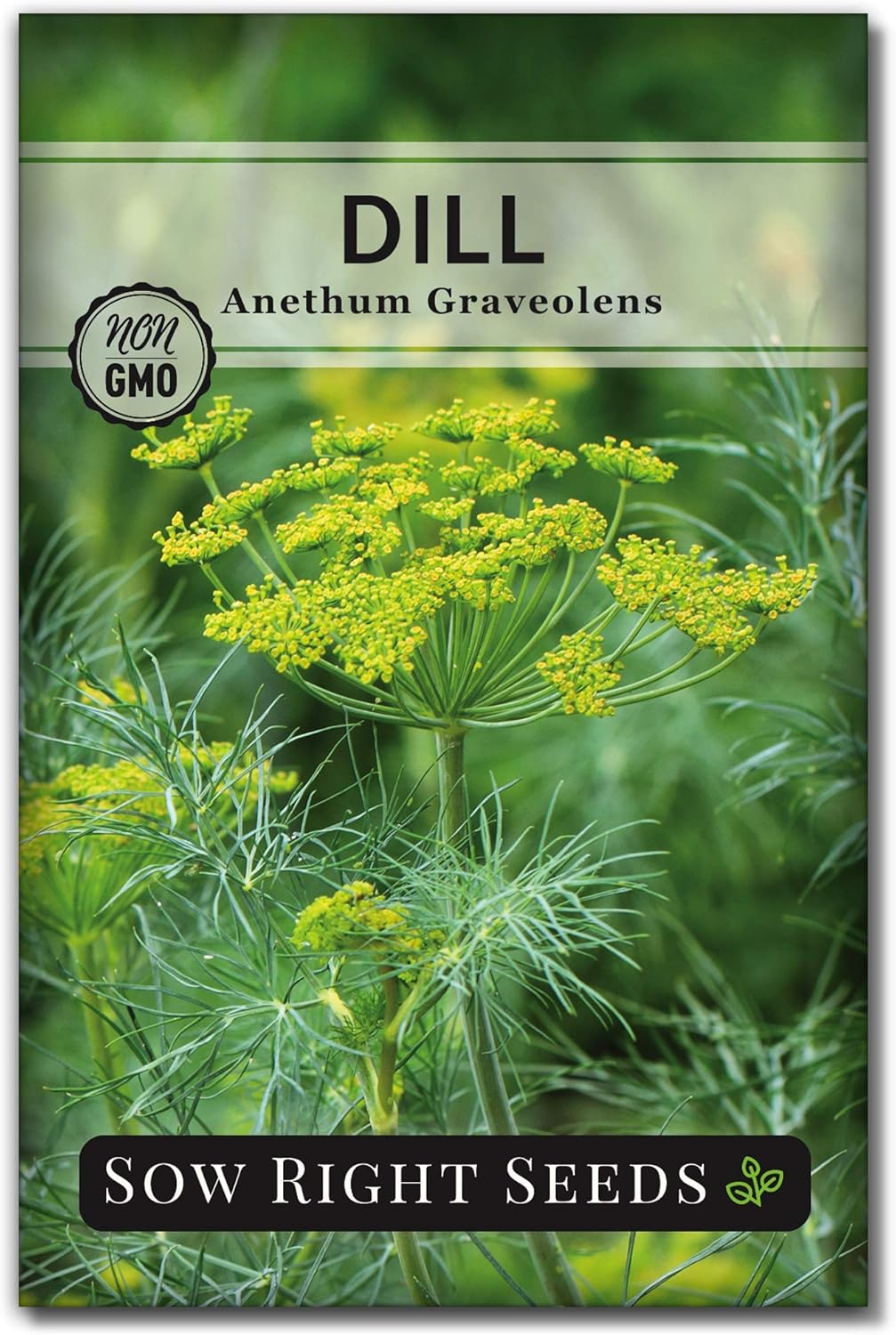
The inflorescence of the dill plant is a compound umbel, a structure where multiple flower stalks (rays) radiate from a common point, which in turn support smaller umbels (umbellets).1 The flowers are predominantly yellow, though white variants exist, and they lack a distinct corolla morphology or corona lobes.2 The fruit of Anethum graveolens is a schizocarp, a dry fruit that splits into two single-seeded parts known as mericarps at maturity.2 These fruits, commonly referred to as dill seeds, are oval, flattened, and measure between 3 and 6 mm in length.2 They feature prominent ridges and contain the oil ducts (vittae) where the plant’s volatile compounds are concentrated.2
| Morphological Characteristic | Specification and Data Point |
| Growth Form | Annual herb, self-supporting 2 |
| Plant Height | 30–150 cm 2 |
| Stem Type | Hollow, slender, glaucous 1 |
| Leaf Arrangement | Alternate, compound 2 |
| Leaf Blade Edges | Entire, filiform divisions (1–2 mm) 1 |
| Flower Color | Yellow 2 |
| Inflorescence | Compound umbel 1 |
| Fruit Type | Flattened schizocarp 2 |
| Fruit Dimensions | 3–6 mm length 2 |
| Seed Surface | Rigid with distinct ribs 13 |
The physiological development of the plant is sensitive to environmental stressors. While dill prefers full sun and well-drained soil, it is prone to “bolting” during periods of drought or excessive heat.6 Bolting involves the rapid transition from vegetative growth to reproductive development, during which the plant stops producing the soft, feathery leaves preferred for culinary use and directs its energy into flower and seed production.6 This sensitivity necessitates careful timing for gardeners and commercial growers seeking to maximize the yield of “dill weed” versus “dill seed.”
Archaeological and Historical Narrative of Cultivation
The cultivation of Anethum graveolens represents one of the oldest continuous agricultural traditions in human history. Archaeological evidence suggests that dill has been utilized by humans since the Neolithic period.2 Its presence in the Mediterranean and Near East is well-documented; notable findings include traces of the plant in the tomb of the Egyptian Pharaoh Amenhotep II, which dates to approximately 1400 BC.1 Furthermore, the Ebers Papyrus, one of the oldest known medical texts from circa 1500 BC, lists dill as a remedy for pain and other physical ailments, indicating that its medicinal properties were recognized by the ancient Egyptians long before its global dissemination.5
Greco-Roman Integration and Symbolic Value
In Ancient Greece, dill was esteemed for its multifaceted utility. The plant was mentioned in the 7th century BC in the city of Samos and was a subject of botanical inquiry for Theophrastus (371–287 BC).1 In Greek culture, dill was a symbol of wealth and prosperity.6 Greek physicians utilized it to treat digestive issues, hiccups, and wounds, while the general population used the leaves to cover their eyes to induce sleep.4 The Romans further expanded the reach of dill, bringing it to the northern reaches of their empire, including Great Britain, where traces have been found in Roman ruins.4 For the Romans, dill was a symbol of good luck and was frequently used in the garlands of athletes to signify success.6
Medieval Folklore and the Protection Against Witchcraft
As dill spread throughout Europe during the Middle Ages, it acquired a strong association with folklore and protective magic. It was widely believed that dill could protect individuals from witchcraft and sorcery. To this end, sprigs of dill were often hung over doorways or sewn into clothing as charms to ward off evil spells.4 Paradoxically, while it was used to fend off witches, it was also a common ingredient in love potions, where it was thought to enhance the effectiveness of the concoction.6 This duality highlights the plant’s significant cultural footprint during a period when the lines between medicine, culinary arts, and mysticism were often blurred.
Global Dissemination and the Colonial Era
The journey of Anethum graveolens continued as European settlers brought the herb to the Americas. During the expansion of the British Empire, dill became a central component of “gripe water,” a formulation developed to soothe infant colic and digestive distress.5 This application became particularly prominent in India during British occupation, where dill (known locally as shatapushpa or shepu) was already integrated into Ayurvedic traditions.4 Today, dill remains a staple in the traditional cuisines and pharmacopeias of North Africa, Iran, the Arabian Peninsula, Eurasia, and North America.1
Biochemical Constituents and Essential Oil Dynamics
The biological efficacy and sensory profile of Anethum graveolens are fundamentally determined by its essential oil (EO) composition. This chemical matrix is highly dynamic, varying significantly depending on the part of the plant extracted, the developmental stage at harvest, the geographical location of cultivation, and the extraction methodology employed.11 The concentration of essential oil is generally lowest in the vegetative tissues (approximately 0.08% in leaves) and reaches its peak in the mature fruits, where it can comprise up to 3.20% to 4.81% of the dry weight.16
Herb Oil (Dill Weed Oil) vs. Seed Oil (Dill Fruit Oil)
The chemical profiles of dill weed oil and dill seed oil are distinct, leading to different culinary and medicinal applications. Herb oil, obtained through steam distillation of the stalks and leaves before the fruit matures, is characterized by a high concentration of monoterpene hydrocarbons.11 In contrast, seed oil is dominated by oxygenated monoterpenes, specifically carvone.15
- $\alpha$-Phellandrene: This compound is the primary odorant of the vegetative stage, often comprising up to 46.33% of the herb oil.17 It contributes a grassy, peppery aroma.15
- Limonene: Found in both herb and seed oil, it provides the fresh, citrus-like notes. In herb oil, it typically ranges from 18.96% to 40%.15
- Carvone: The hallmark of the mature seed, carvone provides the spicy, caraway-like aroma. In seed oil, carvone concentrations often exceed 40%, reaching as high as 75.2% in Romanian varieties.11
- Dill Ether: A unique compound that gives dill its signature scent, distinguishing it from related species like fennel or caraway. It is typically found in herb oil at concentrations exceeding 10%.15
- Myristicin and Dillapiole: These phenylpropanoids contribute to the complex aroma and have been studied for their biological activities. Dillapiole is particularly high in Indian dill varieties (Anethum sowa), where it can reach 33.3%.4
| Component (%) | Herb Oil (Vegetative) | Flower Oil | Seed Oil (Mature) |
| Carvone | 8.40 15 | 18.93 15 | 33.57 – 75.2 15 |
| Limonene | 18.96 – 43.8 15 | 11.20 15 | 6.9 – 43.8 17 |
| $\alpha$-Phellandrene | 21.83 – 46.33 15 | 6.50 15 | 1.4 – 8.1 17 |
| Myristicin | 7.11 15 | 23.24 15 | 7.11 – 24.21 15 |
| Dihydrocarvone | < 1.0 15 | 4.63 15 | 3.1 – 14.7 18 |
| Dill Ether | > 10.0 15 | 7.59 15 | 13.2 – 18.84 18 |
The Culinary Chemistry of Dill Weed and Seed
In the culinary arts, dill is a primary agent of flavor, but its effective application requires an understanding of its volatile chemistry. The culinary world maintains a strict distinction between “dill weed” (the leaves and stems) and “dill seed” (the mature fruit), as they are chemically and sensory distinct.6
The Volatility of Fresh Dill Weed
Fresh dill weed is prized for its bright, grassy, and citrus-anise flavor profile, which is largely driven by its monoterpene content. However, these compounds are highly volatile and sensitive to thermal degradation.19 Laboratory analysis indicates that fresh dill’s signature volatile oils can evaporate almost completely within 90 seconds of simmering, while prolonged exposure to heat leads to a 90% loss of flavor after only five minutes.19
Consequently, the timing of addition is critical. Fresh dill should be added during the final two minutes of cooking or used raw as a garnish.19 It is a foundational element in Northern and Eastern European cuisines, where it is used to flavor gravlax, borscht, and potato stews.6 In Mediterranean and Middle Eastern cooking, it is indispensable for yogurt-based sauces like Greek tzatziki and various herb-heavy salads.22 Notably, the acidity from lemon or vinegar helps preserve the chlorophyll in dill, preventing the leaves from turning black and bitter during preparation.19
The Robustness of Dill Seed
In contrast to the delicate leaves, dill seeds are pungent, earthy, and warm, possessing a flavor profile closer to caraway.7 Their high carvone content makes them more stable under heat, allowing them to be added early in the cooking process to integrate with aromatics.6 The seeds are the quintessential spice for pickling, providing the traditional “tang” to brines for cucumbers, beets, and other vegetables.7
Preparation techniques for dill seeds can further enhance their profile. Toasting the seeds in a dry skillet for 1-2 minutes until fragrant releases their natural oils and develops a nutty undertone.7 Once toasted, the seeds can be ground into a fine powder for meat rubs and spice blends or soaked in liquids like vinegar or hot water to soften their texture for use in bread doughs and salad dressings.7
Preservation and Substitution Science
When fresh dill is unavailable, the choice of preservation method significantly dictates the outcome of the dish.
- Frozen Dill: Freezing is considered the superior method for preserving the “fresh-cut grass” notes of dill weed. Flash-frozen dill or home-frozen sprigs retain approximately 80% of their flavor and aroma, compared to only 45% for dried dill.19 Frozen dill cubes are a convenient modern alternative, allowing for a 1:1 substitution with fresh dill in almost any recipe.25
- Dried Dill (Dill Weed): The drying process causes enzymatic reactions that convert citrusy monoterpenes into woody sesquiterpenes, resulting in a muted, hay-like profile.20 While dried dill is useful for soups and stews where flavors have time to meld, it should be avoided in raw applications like tzatziki, where it can taste “dusty” or “medicinal”.19
- Substitution Ratios: A common guideline is to use 1 teaspoon of dried dill weed for every 1 tablespoon of fresh dill.20 However, substituting dill seed for dill weed is strongly discouraged, as the pungent, caraway-like notes of the seed will overwhelm a dish meant to have a subtle, herbal profile.7
| Feature | Fresh Dill Weed | Dried Dill Weed | Dill Seed |
| Flavor Profile | Bright, grassy, citrus-anise 19 | Earthy, hay-like, bitter 19 | Warm, pungent, caraway-like 7 |
| Best Use | Raw/Cold dishes 19 | Long-cooked stews 19 | Pickling, baking, rubs 7 |
| Heat Tolerance | Very Low (90% loss in 5 min) 19 | Moderate (60% loss in 10 min) 19 | High (improves with cooking) 7 |
| Substitution | 1 tablespoon (standard) | 1 teaspoon (= 1 tbsp fresh) 24 | Not interchangeable with weed 19 |
| Vitamin C | High (8% DV per cup) 19 | Muted (40% loss in drying) 20 | Trace amounts 14 |
Gastrointestinal Pharmacology and Traditional Ayurvedic Applications
Dill’s primary medicinal reputation across cultures is as a potent digestive aid. It is classified pharmacologically as a carminative, stomachic, and antispasmodic.4 These properties are utilized to address a wide range of gastrointestinal complaints, including flatulence, bloating, indigestion, and abdominal cramping.5
The Mechanism of Carminative Action
Carminatives function by relaxing the smooth muscles of the intestinal tract, which facilitates the passage of food and the expulsion of trapped gas.5 In the Ayurvedic tradition, dill is known as “shatapushpa” (meaning 100 flowers, referring to its umbel shape) and is valued for its ability to stimulate “agni” (digestive fire).9 It is described as having katu (pungent) and tikta (bitter) rasa (tastes), which help clear the sinus passages and liquefy mucus as an expectorant.4 Ayurvedic practitioners often prescribe a paste of dill seeds pounded with milk for joint swellings or use it in more than 56 complex preparations like Dasmoolarishtam to treat abdominal discomfort.4
Pediatric Applications and Gripe Water
Dill has a unique affinity for pediatric digestive issues, particularly infant colic. This condition, characterized by paroxysmal crying and abdominal distress, has been treated with “dill water” for centuries.5 The first commercial gripe water, developed in England, utilized dill oil as a primary active ingredient to soothe spasming in the infant gut.5 Modern home remedies still recommend chewing on a mixture of equal parts dill and fennel seeds after meals to prevent bloating, or preparing a gentle infusion of these seeds for colicky infants.14
Gastro-Protective Effects and Ulcerative Colitis
Modern experimental research has validated many of these traditional uses. Studies in animal models have shown that dill is effective in inhibiting gastric secretions and protecting against stomach ulcers.26 Furthermore, researchers have investigated the protective effects of Dill Fruit Aqueous Extract (DFAE) against acetic acid-induced ulcerative colitis (UC) in rats.12
- Mucosal Healing: DFAE pre-treatment significantly reduced morphological and histopathological alterations of the colonic mucosa.12
- Epithelial Barrier: The extract was found to restore the intestinal epithelial barrier and regulate gut microbiota dysbiosis.12
- Cytokine Modulation: Dill contains compounds that inhibit the release of inflammatory mediators, which are central to the pathogenesis of inflammatory bowel disease (IBD).12
- Dietary Fiber: Dill fruit is rich in both soluble and insoluble fiber, which ferments into butyrate in the large intestine, further supporting the maintenance of UC remission.12
Metabolic and Lipid Modulation in Clinical Practice
A significant frontier in dill research is its impact on metabolic markers, including blood glucose levels and lipid profiles. These findings suggest that Anethum graveolens could serve as a valuable nutraceutical adjunct for patients with Type 2 Diabetes Mellitus (T2DM) and hyperlipidemia.3
Clinical Evidence in Diabetes Management
In a randomized, placebo-controlled clinical trial involving 42 patients with T2DM, subjects received 3 grams of dill powder daily for eight weeks.3 The results were statistically significant across several key biomarkers:
- Insulin and HOMA-IR: The intervention group showed a significant decrease in serum insulin levels and the Homeostatic Model Assessment of Insulin Resistance (HOMA-IR) compared to baseline.3
- Oxidative Stress: There was a notable reduction in malondialdehyde (MDA), a marker of lipid peroxidation and oxidative stress, alongside an increase in Total Antioxidant Capacity (TAC).28
- Glycemic Control: While animal studies have shown significant improvements in fasting blood sugar, human trials have been more focused on the regulation of insulin and the prevention of long-term diabetic complications.3
The underlying mechanism is believed to involve dill’s high flavonoid content and its ability to modulate the expression of genes involved in glucose and fat regulation pathways.21
Impact on Hyperlipidemia and Cholesterol
Dill’s potential to lower blood lipids has been compared to conventional pharmacological agents. In one study, hyperlipidemic patients were divided into two groups: one receiving the drug gemfibrozil (900 mg daily) and the other receiving dill tablets (six tablets daily).30 After two months, both groups showed a significant reduction in mean total cholesterol and triglycerides.30
A systematic review of six randomized controlled trials involving 171 cases confirmed these findings, indicating that dill supplementation is associated with a significant reduction in serum total cholesterol and Low-Density Lipoprotein (LDL) cholesterol.27 While some studies also report an increase in “good” High-Density Lipoprotein (HDL) cholesterol, the systematic review found no consistent significant change in HDL levels across the pooled data.3 These results highlight dill’s potential as a cardioprotective agent by reducing the buildup of fatty plaques in the arteries.21
| Lipid Parameter | Baseline Average (mg/dl) | Post-Dill Treatment (mg/dl) | Statistical Significance |
| Total Cholesterol | Significant reduction observed 30 | Reduction confirmed in meta-analysis 27 | P < 0.001 27 |
| LDL Cholesterol | High risk levels (>160) | Significant reduction | P = 0.005 27 |
| Triglycerides | Significant reduction in hyperlipidemic/T2DM patients 27 | P = 0.001 27 | |
| HDL Cholesterol | 18.35 pg/ml (in related rat models) | Variable; significant increase in some T2DM studies 3 | P < 0.05 (in specific studies) 3 |
Endocrine Interactions: Thyroid and Reproductive Systems
Beyond metabolic health, Anethum graveolens exhibits significant influence over the endocrine system, with particular emphasis on thyroid function and the female reproductive cycle. These interactions present both therapeutic opportunities and critical safety considerations.
Selective Triiodothyronine (T3) Inhibition
Recent research conducted in Turkey has investigated the ethnic use of dill (“dereotu”) for treating thyroid dysfunction. In animal models of L-thyroxine-induced hyperthyroidism, researchers found that high doses (500 mg/kg/day) of Anethum graveolens ethanolic extract (AGEE) acted as a selective inhibitor of Triiodothyronine (T3).31 While T3 levels significantly decreased in the treated groups, no significant changes were observed in Thyroxine (T4) levels.31
Clinical observations of patients consuming one bunch (approximately 100g) of fresh dill daily corroborated these findings, showing a significant decrease in median free T3 and free T4 levels.33 Furthermore, a study on patients with benign thyroid nodules and thyroiditis found that 90 days of treatment with dill extract significantly reduced TSH, free T4, and anti-TPO antibody levels, leading to a significant reduction in nodule size as measured by ultrasonography.34 These findings suggest that dill may modulate the activity of iodothyronine deiodinase and thyroid peroxidase enzymes.34
Reproductive Health and Contraceptive Potential
Dill’s influence on reproductive hormones has been a subject of ethnobotanical and experimental inquiry for decades. While it is used traditionally to relieve period pain (dysmenorrhea) and assist in labor, high doses have been shown to induce temporary infertility in female rat models.21
- Cycle Modulation: Dill seed aqueous extract causes a significant increase in the total duration of the estrous cycle, primarily by prolonging the diestrus phase.36
- Hormonal Shift: This cycle lengthening is associated with a significant increase in progesterone concentration, leading to a prolonged luteal phase.36
- Contraceptive Effect: The extract effectively induces infertility without causing permanent structural damage to the oocyte or zona pellucida.36 The infertility is believed to be reversible once the administration of the herb ceases.
- Offspring Impact: In studies where pregnancy occurred despite treatment, newborns exhibited significantly lower weights and reduced crown-rump length, although these growth delays typically corrected within three weeks.36
Due to its emmenagogue properties (the ability to stimulate menstruation) and potential abortifacient effects, medicinal amounts of dill are strictly contraindicated during pregnancy, as they may lead to miscarriage.37
Antimicrobial, Antifungal, and Preservative Mechanisms
The secondary metabolites of Anethum graveolens, particularly the monoterpenes carvone and limonene, possess potent inhibitory effects against a broad range of microorganisms, making dill a valuable agent in food preservation and traditional antisepsis.16
Antibacterial Efficacy
Dill essential oils exhibit a wide spectrum of antibacterial activity, measured by zones of inhibition and Minimum Inhibitory Concentrations (MIC). Research has confirmed its effectiveness against several significant pathogens:
- Foodborne and Enteric Pathogens: Escherichia coli, Staphylococcus aureus, and Salmonella species.16
- Respiratory and Opportunistic Pathogens: Klebsiella pneumoniae, Bacillus subtilis, and Pasteurella multocida.10
The mechanism involves the lipophilic character of the monoterpenes, which allows them to permeate microbial cell membranes. This disruption increases membrane fluidity, inhibits membrane-embedded enzymes, and interferes with cellular metabolic processes.17
Antifungal and Insecticidal Properties
In the context of agriculture and food storage, dill essential oil serves as a natural fungicide and insect repellent. It has been shown to inhibit the growth of common spoilage fungi such as Aspergillus niger, Fusarium solani, and Alternaria alternata.16 Additionally, the high carvone content in dill seeds is utilized during post-harvest storage as a retardant to prevent potato sprouting and as an effective repellent against the Indian meal moth (Plodia interpunctella).17
Toxicology, Pharmacovigilance, and Contraindications
Despite its general safety in culinary contexts, the pharmacological application of Anethum graveolens necessitates a comprehensive understanding of its toxicological profile and potential drug-herb interactions.21
Allergic Potential and Phototoxicity
- Cross-Sensitivity: Allergic reactions to dill are rare but can occur, particularly in individuals who are already sensitive to other members of the Apiaceae family (e.g., carrots, celery, fennel, caraway).37
- Photodermatitis: Contact with fresh dill juice or high-concentration extracts followed by exposure to UV light can cause skin irritation and significant photosensitivity. This increases the risk of severe sunburns and, potentially, long-term skin damage.37
Critical Herb-Drug Interactions
- Lithium: Dill possesses a diuretic effect, increasing the production of urine. Like many diuretics, it can interfere with the body’s ability to clear lithium, leading to elevated serum concentrations and potential lithium toxicity. Patients on lithium therapy should avoid medicinal amounts of dill.37
- Antidiabetic Agents: Because dill extract has demonstrated hypoglycemic effects, its concurrent use with medications like insulin, metformin, or sulfonylureas may potentiate the blood-sugar-lowering effect, leading to a risk of hypoglycemia.37
- Thyroid Medications: Dill’s ability to lower T3 and T4 levels may counteract the effects of thyroid hormone replacement therapies in hypothyroid patients. Conversely, its selective T3 inhibition may interact with antithyroid medications in hyperthyroid patients.33
- CYP Enzyme Induction: Laboratory evidence suggests that dill extract can up-regulate several Phase I and II drug-metabolizing enzymes (such as CYP1A2, CYP2C19, and SULT1A1) and transporters like P-glycoprotein (ABCB1).41 This could theoretically alter the bioavailability and plasma levels of a wide range of pharmaceuticals, particularly those with a narrow therapeutic window.41
Surgical and Physiological Precautions
- Surgery: Due to its potential impact on blood glucose levels, individuals should cease taking concentrated dill extracts at least two weeks before any scheduled surgery to ensure stability in perioperative glycemic control.37
- Hypothyroidism: Individuals with an underactive thyroid should avoid medicinal use of dill, as it may further lower already deficient thyroid hormone levels.37
- Renal Function: While dill is a traditional diuretic used for urinary tract problems, its influence on mineral balance and the excretion of other medications requires caution in patients with renal insufficiency.37
Synthesis and Future Research Horizons
The multifaceted analysis of Anethum graveolens reveals a botanical entity of remarkable chemical resilience and therapeutic potential. From its ancient origins as a sacred Egyptian funerary herb to its modern status as a subject of rigorous clinical trials for metabolic and endocrine disorders, dill has remained a constant in the human toolkit for health and gastronomy.
The emerging evidence regarding dill’s selective Triiodothyronine (T3) inhibition and its ability to reduce thyroid nodules represents a significant area for future clinical investigation, particularly in populations where thyroid disorders are prevalent. Similarly, its role in improving insulin resistance and lipid profiles positions it as a viable nutraceutical adjunct in the management of metabolic syndrome.
However, the chemical dynamism of the plant—where flavor and therapeutic efficacy are dictated by precise harvest timing and extraction methods—underscores the need for standardized pharmacological preparations. As the field of nutratherapy continues to evolve, Anethum graveolens serves as a primary example of how traditional ethnobotanical knowledge, when viewed through the lens of modern molecular science, can provide sophisticated solutions for contemporary health challenges. Continued high-quality, randomized human clinical trials will be essential to precisely define therapeutic dosages, establish long-term safety profiles, and fully realize the potential of this versatile herb.
Works cited
- Dill – Wikipedia, accessed December 24, 2025, https://en.wikipedia.org/wiki/Dill
- Anethum graveolens (dill) – Go Botany – Native Plant Trust, accessed December 24, 2025, https://gobotany.nativeplanttrust.org/species/anethum/graveolens/
- The effects of Anethum graveolens (dill) powder supplementation on clinical and metabolic status in patients with type 2 diabetes – PMC – PubMed Central, accessed December 24, 2025, https://pmc.ncbi.nlm.nih.gov/articles/PMC7275438/
- Anethum graveolens: An Indian traditional medicinal herb and spice …, accessed December 24, 2025, https://pmc.ncbi.nlm.nih.gov/articles/PMC3249919/
- Dill Uses and Plant Monograph – LearningHerbs, accessed December 24, 2025, https://www.learningherbs.com/blog/dill-uses
- The Long, Ancient History of Dill Weed – The Spruce Eats, accessed December 24, 2025, https://www.thespruceeats.com/the-history-of-dill-1807592
- How to Prepare Dill Seed for Cooking – Girl and the Kitchen, accessed December 24, 2025, https://girlandthekitchen.com/blog/how-to-prepare-dill-seed-for-cooking/
- Dill – Anethum graveolens | Washington College, accessed December 24, 2025, https://www.washcoll.edu/learn-by-doing/ces/plants/apiaceae/anethum-graveolens.php
- Dill (dried) Benefits (Ayurveda Insights) – Joyful Belly, accessed December 24, 2025, https://www.joyfulbelly.com/Ayurveda/ingredient/Dill-Dried/92
- Dill: Nutrition, Benefits, and Uses – Healthline, accessed December 24, 2025, https://www.healthline.com/nutrition/dill
- Composition and Characteristics of dill: a review, accessed December 24, 2025, https://img.perfumerflavorist.com/files/base/allured/all/document/2016/04/pf.8204.pdf
- Protective effects of dill fruit against acute acetic acid‐induced …, accessed December 24, 2025, https://pmc.ncbi.nlm.nih.gov/articles/PMC12117194/
- dill – FoodLink – Purdue Extension, accessed December 24, 2025, https://extension.purdue.edu/foodlink/food.php?food=dill
- Gas & Bloating Home Remedy With Dill – The Ayurveda Experience Blog, accessed December 24, 2025, https://blog.theayurvedaexperience.com/gas-bloating-home-remedy-with-dill/
- Chemical composition of the dill essential oils (Anethum graveolens L.) from Bulgaria, accessed December 24, 2025, https://bcc.bas.bg/BCC_Volumes/Volume_51_Special_D_2019/BCC-51-D-2019-214-216-Dimov-44.pdf
- The Effect of Different Extraction Techniques on the Bioactive …, accessed December 24, 2025, https://pmc.ncbi.nlm.nih.gov/articles/PMC11932054/
- Chemical Composition and Bioactivity of Dill Seed (Anethum graveolens L.) Essential Oil from Plants Grown under Shading – NIH, accessed December 24, 2025, https://pmc.ncbi.nlm.nih.gov/articles/PMC10974297/
- Chemical Composition and Bioactivity of Dill Seed (Anethum graveolens L.) Essential Oil from Plants Grown under Shading – MDPI, accessed December 24, 2025, https://www.mdpi.com/2223-7747/13/6/886/review_report
- Dill Weed Recipes: Science-Backed Timing & Pairing Guide – Spices, accessed December 24, 2025, https://spice.alibaba.com/spice-basics/dill-weed-from-spice-rack-to-star-ingredient-7-recipes-that-will-blow-your-mind
- Dill Weed vs Fresh Dill: Key Differences & Best Uses – Spices, accessed December 24, 2025, https://spice.alibaba.com/spice-basics/dill-weed-vs-fresh-dill
- Dill: Benefits, Nutrition, and Risks – Health, accessed December 24, 2025, https://www.health.com/dill-8402621
- Dill Weed Recipes, How To Use & Flavor Pairings – McCormick, accessed December 24, 2025, https://www.mccormick.com/blogs/how-to/about-dill-weed-uses-pairings-and-recipes
- What can I make with Dill? Best recipes & food pairings – Foodcombo, accessed December 24, 2025, https://foodcombo.com/find-recipes-by-ingredients/dill
- Cooking with Dill Recipes – Taste of Home, accessed December 24, 2025, https://www.tasteofhome.com/article/cooking-with-dill-recipes/
- Why Choose Frozen Dill Over Freshly Chopped Dill? – Dorot Gardens, accessed December 24, 2025, https://dorotgardens.com/why-choose-frozen-dill/
- The Study of Anti-Inflammatory Activity of Oil-Based Dill (Anethum …, accessed December 24, 2025, https://pmc.ncbi.nlm.nih.gov/articles/PMC3813168/
- Anethum graveolens L. (Dill) Effect on Human Lipid Profile: An Updated Systematic Review, accessed December 24, 2025, https://pubmed.ncbi.nlm.nih.gov/34838903/
- The effects of Anethum graveolens (dill) powder supplementation on clinical and metabolic status in patients with type 2 diabetes – PubMed, accessed December 24, 2025, https://pubmed.ncbi.nlm.nih.gov/32503652/
- The effects of Anethum graveolens (dill) powder supplementation on clinical and metabolic status in patients with type 2 diabete – SciSpace, accessed December 24, 2025, https://scispace.com/pdf/the-effects-of-anethum-graveolens-dill-powder-1k5mq86lf8.pdf
- Anethum graveolens and hyperlipidemia: A randomized clinical trial – PMC – NIH, accessed December 24, 2025, https://pmc.ncbi.nlm.nih.gov/articles/PMC4235097/
- (PDF) Effects of Ethanolic Extract of Anethum graveolens on T3, T4, and TSH Levels in Rat Model of L-Thyroxine Induced Hyperthyroidism – ResearchGate, accessed December 24, 2025, https://www.researchgate.net/publication/390279833_Effects_of_Ethanolic_Extract_of_Anethum_graveolens_on_T3_T4_and_TSH_Levels_in_Rat_Model_of_L-Thyroxine_Induced_Hyperthyroidism
- Effects of Ethanolic Extract of Anethum graveolens on T3, T4, and TSH Levels in Rat Model of L-Thyroxine Induced Hyperthyroidism | Trends in Pharmacy, accessed December 24, 2025, https://trendsinpharmacy.org/index.php/pub/article/view/4
- Herbal medicines used for thyroid disease in Turkey, and short-term effects of Anethum graveolens | ECE2016 | 18th European Congress of Endocrinology | Endocrine Abstracts, accessed December 24, 2025, https://www.endocrine-abstracts.org/ea/0041/ea0041ep981
- Does Use of Anethum Graveolens Affected Thyroid Hormone Levels and Thyroid Nodules? | Request PDF – ResearchGate, accessed December 24, 2025, https://www.researchgate.net/publication/309041263_Does_Use_of_Anethum_Graveolens_Affected_Thyroid_Hormone_Levels_and_Thyroid_Nodules
- Dill – Roots of Medicine, accessed December 24, 2025, https://dsps.lib.uiowa.edu/roots/dill-2/
- Effects of Anethum graveolens L. (dill) on Oocyte and Fertility of …, accessed December 24, 2025, https://pmc.ncbi.nlm.nih.gov/articles/PMC4322175/
- Dill: Overview, Uses, Side Effects, Precautions, Interactions, Dosing …, accessed December 24, 2025, https://www.webmd.com/vitamins/ai/ingredientmono-463/dill
- Dill: Health Benefits, Side Effects, Uses, Dose & Precautions – RxList, accessed December 24, 2025, https://www.rxlist.com/supplements/dill.htm
- Lithium as medicine (drug interactions) | Research Starters – EBSCO, accessed December 24, 2025, https://www.ebsco.com/research-starters/complementary-and-alternative-medicine/lithium-medicine-drug-interactions
- Lithium interactions with non-steroidal anti-inflammatory drugs and diuretics – A review, accessed December 24, 2025, https://www.scielo.br/j/rpc/a/XDm6DyQ9nVNChLjwcjf8txz/
- Dill Shows Potential for Herb-Drug Interactions via Up-Regulation of …, accessed December 24, 2025, https://pubmed.ncbi.nlm.nih.gov/35001576/
- Herb-Drug Interaction Chart – Standard Process, accessed December 24, 2025, https://my.standardprocess.com/MediHerb-Document-Library/Catalog-Files/herb-drug-interaction-chart.pdf
- Antihypertensive Drugs Interaction with Herbal Medicine – Review – International Journal of Pharmaceutical and Phytopharmacological Research, accessed December 24, 2025, https://eijppr.com/storage/models/article/OwAcro2YJlSBl6T96bxg8bsyyHsrTAzu8Nd6SDypge45GOl2R9XyXN4ZYwaw/antihypertensive-drugs-interaction-with-herbal-medicine-review.pdf
