
“As an Amazon Associate, I earn from qualifying purchases made on Amazon through links in this website”
The Comprehensive Pharmacognosy, Ethnobotany, and Culinary Science of Anthriscus cerefolium
The botanical world offers few specimens as delicate yet historically significant as Anthriscus cerefolium, known ubiquitously in culinary circles as chervil or French parsley. This member of the Apiaceae family represents a intersection of ancient folk wisdom, classical European gastronomy, and modern phytochemical research. While often sidelined in the shadow of its more robust relative, common parsley, chervil possesses a unique chemical profile and a history of use that spans the transition from the sacred herbs of the Anglo-Saxons to the foundational sauces of French haute cuisine. An exhaustive examination of Anthriscus cerefolium reveals a plant of remarkable complexity, characterized by extreme sensitivity to environmental stressors, a volatile aromatic signature that defies traditional preservation, and a suite of bioactive compounds that offer legitimate therapeutic potential within cardiovascular and digestive medicine. 1
Botanical Systematics and Morphological Analysis
The scientific classification of Anthriscus cerefolium places it within the kingdom Plantae, specifically within the clade of Angiosperms and the order Apiales. 1 As a member of the Apiaceae (formerly Umbelliferae) family, it shares the characteristic “umbel” flower structure with prominent relatives such as carrots, celery, dill, and coriander. 2 The genus Anthriscus is distinguished from its close relatives by its specific fruit structure and the absence of a prominent carpopodium. 5
Taxonomic Classification and Nomenclature
The botanical identity of chervil has been a subject of rigorous taxonomic debate since the 18th century. Originally classified by Carl Linnaeus as Scandix cerefolium in 1753, the plant underwent several revisions before being assigned to its currently accepted designation by Hoffmann in 1814. 6 The extensive list of homotypic and heterotypic synonyms reflects the historical challenges in distinguishing this species from wild counterparts like Anthriscus sylvestris and other closely related genera such as Chaerophyllum. 6
| Taxonomic Rank | Detail |
| Kingdom | Plantae |
| Phylum | Anthophyta |
| Class | Dicotyledoneae |
| Order | Apiales |
| Family | Apiaceae |
| Genus | Anthriscus |
| Species | Anthriscus cerefolium (L.) Hoffmann 1 |
Historical nomenclature reveals a fascinating evolution of the plant’s identity. It was formerly called myrhis by the Romans, a name derived from the Greek word for the fragrant resin myrrh, due to the striking similarity in the aroma of their respective volatile oils. 1 In various regions, it is referred to as garden chervil, French parsley, salad chervil, or even “rich man’s parsley,” a colloquialism that hints at its refined flavor profile compared to more common herbs. 1
Morphological Characteristics
Anthriscus cerefolium is a delicate annual or biennial herb that typically reaches a height of 40 to 70 centimeters (16 to 28 inches) with a spread of approximately 25 to 30 centimeters. 1 The plant’s structure is characterized by an upright, branched, and finely grooved stem that emerges from a slender, white taproot. 4
The foliage is the plant’s most prized culinary and medicinal attribute. The leaves are tripinnate or finely divided, possessing a lacy, fern-like appearance that is significantly more delicate and softer in texture than common parsley. 1 They exhibit a pale, light green hue, which can occasionally develop a purple or reddish tinge when the plant is subjected to environmental stress, such as drought or the cooling temperatures of early autumn. 2
During the reproductive phase, chervil produces compound umbels ranging from 2.5 to 5 centimeters across, composed of numerous tiny, white, hermaphroditic flowers.1 Each flower typically possesses five petals and serves as a significant source of nectar and pollen for pollinators such as bees and butterflies. 2 The resulting fruit is a schizocarp, approximately 1 centimeter long, oblong-ovoid in shape, and featuring a slender, ridged beak. As these fruits mature, they turn from green to a shiny dark brown or black. 1
Historical Lineage and Ethnobotanical Significance
The precise geographical origin of Anthriscus cerefolium is somewhat obscured by its long history of human cultivation. While most botanical authorities, including Kew’s Plants of the World Online, limit its native range to the Caucasus region (Eastern Central Europe to Northwestern and Northern Iran), the plant has naturalized throughout much of Europe and North America. 1 This widespread distribution is largely credited to the Romans, who actively dispersed the herb across their empire, valuing it for both its flavoring and healing properties. 1
Ancient and Medieval Contexts
In antiquity, chervil was more than a mere garnish. The Romans integrated it into their pharmacopoeia, with scholars like Pliny the Elder (23–79 CE) recording its use for various ailments. Pliny noted that chervil seeds, when infused with vinegar, were an effective cure for hiccups—a remedy that persisted in European folk medicine for over a millennium. 1
By the Middle Ages, chervil had acquired a layer of spiritual and symbolic meaning. Due to its association with myrrh, it became a symbol of new life and rejuvenation. 12 This symbolism is particularly evident in the traditional consumption of chervil soup on Maundy Thursday (Holy Thursday or Gründonnerstag in German) in several European countries. This “Green Thursday” ritual involves eating the soup as a way to “spring clean” the body and symbolize spiritual rebirth before Easter. 4
The seventeenth-century English herbalist Nicholas Culpeper described chervil as a “warm” herb, suggesting its utility in treating “cold” conditions of the stomach, particularly in elderly patients.4 John Gerard, another famous botanist of the era, endorsed it as a herb that “comforts the heart and increases lust and strength,” highlighting its historical perception as a mild stimulant and aphrodisiac. 17
The Nine Sacred Herbs of the Anglo-Saxons
One of the most profound historical records involving Anthriscus cerefolium is the “Nine Herbs Charm” found in the 10th-century Lacnunga manuscript. 20 This charm is a unique synthesis of pre-Christian Germanic paganism and early Christianity, attributing the creation and power of nine sacred herbs to the god Woden and the “wise Lord”. 22
Chervil, identified in Old English as fille, is specifically paired with fennel (finule). The text describes them as “very mighty two” herbs that were created by the Lord while hanging in the heavens and sent into the “seven worlds” as a remedy for both the rich and the poor. 22 The charm was intended to combat “flying venoms”—the Anglo-Saxon conceptualization of infectious diseases and poisons spread through the air. 20
| Herb (Old English) | Modern Identity | Functional Context in the Charm |
| Mucgwyrt | Mugwort | The “oldest of herbs”; effective against poison and flying venoms 21 |
| Wegbrāde | Plantain | “Mother of herbs”; withstands chariots and the cry of brides 21 |
| Stune | Lamb’s Cress | Dashing against pain; driving out the hostile one 22 |
| Attorlaðe | Betony/Fumitory | “Venom-loather”; the undoing of poison 22 |
| Mægðe | Chamomile | Accomplished at Alorford; never yielded life for flying venom 21 |
| Wergulu | Nettle | Sent over the sea’s ridge; a remedy against another poison 21 |
| Æppel | Crab Apple | Accomplished against poison so the serpent never dwells in the house 22 |
| Fille | Chervil | One of the two mighty ones; established for all as a remedy 22 |
| Finule | Fennel | Companion to chervil; sent to seven worlds 22 |
The ritual preparation described in the Lacnunga involves pounding the herbs into a powder, mixing them with old soap and apple juice, and creating a lye paste. This salve was then applied while singing the incantation three times into the patient’s mouth, ears, and onto the wound itself. 21 This underscores the perceived “magical” and restorative power chervil held in early medieval northern Europe.
Horticultural Management and Physiological Adaptations
Cultivating Anthriscus cerefolium requires an understanding of its specific physiological needs, which differ markedly from many other aromatic culinary herbs. Chervil is essentially a cool-weather specialist, adapted to the damp, shaded environments typical of woodland edges. 1
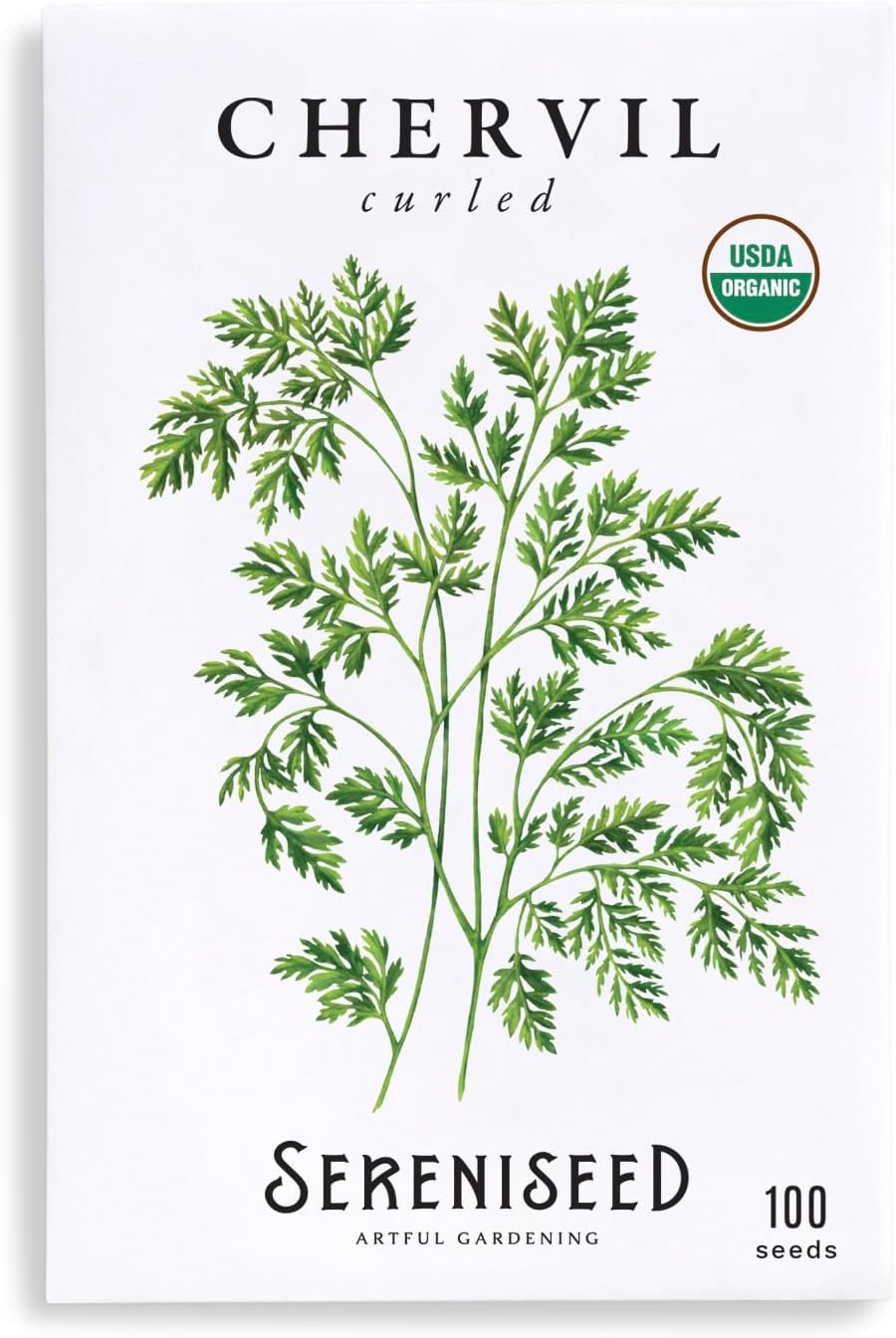
Growth Conditions and Lifecycle Dynamics
Chervil is typically grown as a cool-season annual. It thrives in temperatures between 50 degrees Fahrenheit and 70 degrees Fahrenheit (10 degrees Celsius to 21 degrees Celsius) and is notably frost-hardy, withstanding temperatures down to -5 degrees Celsius to -10 degrees Celsius (14 degrees Fahrenheit to 23 degrees Fahrenheit) in its established state. 11 However, it is extremely sensitive to heat. When ambient temperatures rise or the soil becomes dry, the plant rapidly undergoes “bolting”—the transition from vegetative growth to reproductive flowering. 1 Once a chervil plant bolts, its leaves lose their delicate anise flavor and become unpleasantly bitter. 8
Successful cultivation demands fertile, well-drained soil with a preference for loam or sand. 2 Unlike most herbs that require full sun, chervil performs best in partial shade or filtered sunlight, which helps maintain a cooler microclimate around its delicate foliage. 2 Consistent moisture is paramount; the seeds will germinate faster (typically in 14 to 28 days) if they are soaked overnight before planting. 2
| Cultivation Variable | Optimal Range / Requirement |
| Temperature | 50 degrees Fahrenheit – 80 degrees Fahrenheit (10 degrees Celsius – 27 degrees Celsius; thrives best at 55 degrees Fahrenheit – 65 degrees Fahrenheit |
| Sunlight | Partial shade to light shade; full sun only in very cool climate 2 |
| Soil Type | Loam, fertile sand, free-draining 2 |
| pH Level | Universal (6.0 – 7.5); accommodates acid, neutral, and alkaline 2 |
| Sowing Depth | Approximately 1/2 inch (1 cm) 2 |
| Germination Time | 14 to 28 days 2 |
A critical constraint in chervil horticulture is its long, delicate taproot. This physiological feature makes the plant highly resistant to transplanting. Any disturbance to the root system during a move often results in the plant failing to establish or bolting prematurely. Consequently, it is almost universally recommended to sow seeds directly into their final growing position or use biodegradable pots that can be planted whole. 1
Companion Planting and Ecological Interactions
In integrated garden management, chervil serves several beneficial functions. It is frequently planted alongside lettuce, radishes, and broccoli, where it is believed to help repel pests like aphids and slugs (though anecdotal evidence on slug repulsion is mixed). 2 Its flowers are particularly attractive to hoverflies and ladybugs, which are predatory toward common garden pests. 2 Furthermore, when grown in proximity to radishes, it is claimed to enhance the flavor and crispness of the radish roots. 2
Phytochemical Composition and Volatile Chemistry
The flavor, aroma, and therapeutic efficacy of Anthriscus cerefolium are determined by its complex array of secondary metabolites. These include volatile essential oils, phenolic compounds, flavonoids, and a rich profile of vitamins and minerals. 3
Essential Oils and Aromatic Volatiles
The essential oil of chervil is highly volatile and constitutes approximately 0.3% of the fresh herb and up to 0.9% of the dried seeds.4 Analysis using gas chromatography-mass spectrometry (GC-MS) has identified methyl chavicol (also known as estragole) as the primary constituent, often comprising over 80% of the oil. 1 This compound is responsible for the characteristic anise or licorice-like aroma that defines chervil’s sensory profile. 3
| Component | Concentration (%) | Biological / Sensory Role |
| Methyl Chavicol (Estragole) | 70% – 96% | Primary aromatic compound; anise flavor; potentially genotoxic in high isolates 1 |
| 1-Allyl-2,4-dimethoxybenzene | 12% – 15% | Secondary aromatic volatile; contributes to complexity 1 |
| Undecane (Hendecane) | 1.75% | Aliphatic alkane; found in many aromatic Apiaceae 1 |
| -pinene | < 0.01% | Trace monoterpene with woody, pine-like notes 1 |
The extreme volatility of these compounds has major implications for culinary use. Science indicates that these anise-scented molecules begin to degrade and evaporate rapidly at temperatures exceeding 60 degrees Celsius (140 Fahrenheit). 13 This explains why the “myrrhis” aroma of chervil is almost entirely lost during commercial drying processes and why the herb must be added at the very last moment of cooking to retain its sensory impact. 8
Phenolic Profile and Antioxidants
Recent chemical profiling using LC-HRMS/MS has identified as many as 72 distinct phenolic compounds within chervil extracts. 34 The profile is dominated by caffeoylquinic acid derivatives, specifically malonyl-1,4-O-dicaffeoylquinic acid and 3,5-O-dicaffeoylquinic acid.34 These phenolic compounds provide the herb with significant antioxidant and anti-inflammatory properties, enabling it to neutralize free radicals and protect cellular membranes from oxidative stress. 3
Vitamin and Mineral Content
Chervil is exceptionally nutrient-dense for a culinary herb. It is recognized as a significant source of Vitamin A (carotene), Vitamin C, and essential minerals like iron and potassium. 2
| Nutrient | Amount per 100g (Dried) | Daily Value (DV) Contribution (per 10g) |
| Vitamin A | High levels (as B-carotene) | ~11.5% 2 |
| Vitamin C | ~50 mg | ~8.3% 2 |
| Iron | ~31.95 mg | ~3% – 6% 3 |
| Potassium | ~4740 mg | ~2% 3 |
| Calcium | ~1346 mg | ~2% 3 |
One of chervil’s most notable biochemical features is its high concentration of nitrates and nitrites.9 In the human body, these molecules are converted into nitric oxide (NO), a crucial signaling molecule that relaxes vascular smooth muscle, thereby improving blood circulation and supporting overall cardiovascular health. 9
Pharmacological Review and Medicinal Benefits
The medicinal use of Anthriscus cerefolium spans traditional folk medicine, homeopathic practices, and modern pharmacological investigation. While many of its traditional uses await large-scale human clinical trials, the phytochemical data suggests multiple mechanisms of action that support its therapeutic reputation. 3
Digestive and Metabolic Support
Chervil has been esteemed as a digestive aid for centuries. Its carminative action helps to settle the stomach, stimulate the appetite, and reduce gastrointestinal discomfort such as bloating and colic. 1 The presence of dietary fiber (approximately 11.3g per 100g of dried herb) further supports healthy digestion and regular bowel movements. 4
Recent studies have explored chervil’s anti-enzymatic activity. Methanolic extracts have demonstrated an ability to inhibit enzymes like α-glucosidase and α-amylase, which are involved in the breakdown of carbohydrates. 34 This suggests a potential role for chervil in managing postprandial blood glucose levels in patients with Type 2 diabetes, though further research is required to determine the effective dosage. 34
Cardiovascular and Circulatory Efficacy
The “blood-purifying” reputation of chervil in folk medicine is increasingly viewed through the lens of its impact on the vascular system. Its anti-hypertensive properties are likely a combination of its mild diuretic effect—which increases the discharge of urine and reduces fluid retention—and its role as a nitric oxide donor. 3 By facilitating the production of nitric oxide, chervil helps maintain arterial elasticity and improve peripheral circulation, making it potentially useful for conditions like varicose veins and hemorrhoids. 3 Furthermore, its high iron and zinc content makes it a traditional tonic for combating anemia and improving general vitality. 9
Respiratory and Anti-Inflammatory Actions
As an expectorant, chervil is used to treat coughs and bronchitis by facilitating the secretion and expulsion of mucus from the respiratory tract. 3 Its anti-inflammatory constituents, including various flavonoids, make it an effective herb for managing the symptoms of the common cold, flu, and gout.3 Historical texts also mention its use in treating “bad dreams” and “clearing depression,” which may be linked to its status as a mild stimulant and mood-lifter. 3
Dermatological and Cosmetic Applications
Chervil has a long history of use in skincare. Infusions of the fresh leaves are used as skin cleansers and lotions to treat inflammatory conditions like eczema, acne, and psoriasis. 3 Applying chervil juice directly to the skin is said to reduce the appearance of blemishes and scars.9 Its antioxidant properties are particularly valued in cosmetic formulations intended to delay the signs of aging, such as fine lines and wrinkles, by protecting the skin from oxidative stress and environmental toxins. 9
Emerging Anticancer Research
While most studies on the anticancer potential of the genus Anthriscus focus on the wild species A. sylvestris, recent screenings of A. cerefolium have shown promising cytotoxic properties against various tumor cell lines, including SiHa (cervical cancer) and HepG2 (liver cancer).34 The presence of deoxypodophyllotoxin—a lignan with potent antitumor activity—within the genus suggests that chervil may serve as a sustainable source for developing novel cytostatic agents. 38
Culinary Artistry and Molecular Gastronomy
In the professional kitchen, chervil is regarded as one of the most sophisticated herbs, prized for its ability to enhance a dish without dominating it. Its flavor is a delicate marriage of parsley, tarragon, and subtle anise. 8
The Fines Herbes Tradition
Chervil is one of the four essential components of the classic French fines herbes blend, alongside parsley, chives, and tarragon. 1 This mixture is a staple of French cooking, particularly for omelets, quiches, light soups, and delicate seafood dishes. 10 Unlike “hard” herbs like rosemary and thyme, which can withstand hours of simmering, the fines herbes are added at the very end of the cooking process to preserve their fragile volatile oils. 1
Strategic Culinary Applications
Because chervil’s flavor profile is so mild and heat-sensitive, its application follows a rigorous framework in high-end gastronomy. *13
| Culinary Scenario | Recommendation | Scientific Rationale |
| Raw Applications (Salads, Herb Butters) | Highly Recommended | Volatile oils remain intact; flavor is at its peak 13 |
| Final Garnish for Soups/Sauces | Recommended | Adds a fresh aromatic lift; traditional in Béarnaise and Ravigote 13 |
| Long-Simmered Braises/Stews | Avoid | Flavor compounds degrade at 60 degrees Celsius and dissipate completely 13 |
| Dried Herb Blends | Avoid | Drying process destroys up to 90% of the sensory impact 13 |
| Pairing with Bold Spices | Avoid | Delicate anise notes are easily overpowered by cumin or paprika 13 |
Chervil has a particular affinity for “spring” vegetables such as young peas, asparagus, baby carrots, and new potatoes. 1 It is also the defining herb in Béarnaise sauce and Gribiche sauce, providing a subtle licorice depth that pairs perfectly with grilled meats and fish. 14
Preservation and Storage Techniques
To maintain the quality of fresh chervil, it must be handled with care. The recommended storage method is to wrap the stems in a damp paper towel and place them in an airtight container or a plastic bag in the coldest part of the refrigerator (32 degrees Fahrenheit to 40 degrees Fahrenheit or 0 degrees Celsius to 4 degrees Celsius). 13 If the herb becomes limp, it can often be revived by submerging it in ice-cold water for ten minutes. 13
For long-term storage, freezing is vastly superior to drying. The leaves can be chopped and placed in ice cube trays covered with water, olive oil, or stock. 33 This “flash-freezes” the volatile oils, preserving the flavor for three to six months. 43 Frozen chervil is suitable for cooked applications like soups and sauces but will turn black upon thawing and cannot be used as a fresh garnish. 33

Toxicology, Safety, and Identification
While chervil is a culinary delight, it belongs to a family that contains some of the most toxic plants on earth. Foragers and gardeners must be highly proficient in identifying Anthriscus cerefolium to avoid fatal errors. 1
Distinguishing Chervil from Toxic Look-Alikes
The primary danger is misidentification with Conium maculatum (Poison Hemlock), a lethal biennial that contains the neurotoxin coniine. Both plants possess lacy, fern-like leaves and white umbels, but key morphological features allow for safe differentiation. 15
| Identification Feature | Garden Chervil (A. cerefolium) | Poison Hemlock (C. maculatum) | Wild Chervil (A. sylvestris) |
| Stem Appearance | Grooved, finely ridged, primarily green 7 | Smooth, hairless, with distinctive purple blotches or spots 15 | Hollow, deeply ridged, often purple at the base 16 |
| Stem Texture | May have fine hairs or be hairless 12 | Completely hairless throughout 15 | Velvety hairs, especially on the lower stem 16 |
| Maximum Height | ~2 feet (60 cm) 2 | 6 to 10 feet 15 | 2 to 6 feet 16 |
| Aroma (Crushed) | Pleasant anise or licorice 1 | Unpleasant, mousy, or musty 15 | Mildly parsley-like or unpleasant 47 |
| Seeds | Long, ridged beak, smooth 1 | Small green fruits with wavy ribs 15 | Smooth, shiny dark brown, stubby finger-like 16 |
Another common look-alike is Anthriscus sylvestris (Wild Chervil or Cow Parsley). While not lethal, it is considered a noxious weed in some regions and can cause contact dermatitis due to furanocoumarins in its sap, which makes the skin sensitive to UV light. 1 Foragers should adhere to the rule: “When in doubt, throw it out,” particularly with the Apiaceae family.
The Estragole Safety Debate
A modern point of contention involves the safety of methyl chavicol (estragole), the primary constituent of chervil’s essential oil. In 2025, the European Food Safety Authority (EFSA) issued a draft opinion stating that estragole is a genotoxic carcinogen in animal models and that a safe threshold of exposure for humans cannot be definitively established. 31 This has led to calls for more stringent regulation of dietary supplements containing concentrated chervil extracts. 50
However, some researchers argue that the genotoxicity seen in studies of isolated, high-dose estragole may not translate to the consumption of the whole herb. It is hypothesized that other constituents within the chervil plant matrix may have protective effects that neutralize the metabolic activation of estragole into harmful intermediates. 52 For standard culinary purposes, chervil is still widely regarded as safe for the general population when consumed in moderation. 28
Contraindications and General Precautions
Despite its general safety profile, certain populations should exercise caution. Chervil is considered “likely unsafe” in medicinal quantities during pregnancy and breastfeeding. Some of its chemical constituents have been shown to cause genetic mutations in developing fetuses.36 Additionally, individuals who are prone to “strimmer dermatitis” or have known sensitivities to other plants in the carrot family (such as celery or parsnips) should handle chervil with gloves to avoid potential skin irritation. 1
Synthesis and Future Perspectives
Anthriscus cerefolium remains a fascinating paradox in the botanical world: a herb that is simultaneously a “sacred” mighty healer of the Anglo-Saxons and the most delicate of “gourmet” seasonings in modern French cuisine. Its chemical profile, dominated by the volatile and controversial estragole, provides a bridge between ancient aromatic lore and contemporary toxicology. 4
The plant’s therapeutic potential, particularly its role as a nitric oxide donor for cardiovascular health and its anti-enzymatic potential for metabolic management, warrants more rigorous human clinical trials. 9 In the culinary realm, the herb’s extreme sensitivity to heat and drying serves as a hallmark of its quality; it demands freshness and a light touch, characteristics that ensure its status as a seasonal luxury rather than a commodity staple. 13
As climate change shifts traditional growing zones, the cultivation of this cool-weather specialist may become more challenging, likely driving it toward controlled-environment and hydroponic production. 8 Regardless of the medium, the “joy of leaves” that the Romans brought to Europe will undoubtedly continue to hold a place of honor in both the apothecary’s chest and the chef’s kitchen. 12
Works cited
- Chervil – Wikipedia, accessed January 24, 2026, https://en.wikipedia.org/wiki/Chervil
- Anthriscus cerefolium (Chervil) – Herbs – Gardenia.net, accessed January 24, 2026, https://www.gardenia.net/plant/anthriscus-cerefolium-chervil
- What Is Chervil? Benefits, Uses, Recipes, Side Effects and More – Dr. Axe, accessed January 24, 2026, https://draxe.com/nutrition/what-is-chervil/
- Chervil: A Multifunctional Miraculous Nutritional Herb – Science Alert, accessed January 24, 2026, https://scialert.net/fulltext/?doi=ajps.2012.163.171
- Anthriscus cerefolium – NatureServe Explorer, accessed January 24, 2026, https://explorer.natureserve.org/Taxon/ELEMENT_GLOBAL.2.149284
- Anthriscus cerefolium (L.) Hoffm. | Plants of the World Online | Kew Science, accessed January 24, 2026, https://powo.science.kew.org/taxon/837913-1
- Chervil – ScienceDirect – DOI, accessed January 24, 2026, https://doi.org/10.1533/9780857095688.268
- Chervil – Gardyn Help Center, accessed January 24, 2026, https://help.mygardyn.com/en/articles/1783809
- What are the Uses and Health Benefits of Chervil (Anthriscus Cerefolium)? – Planet Ayurveda, accessed January 24, 2026, https://www.planetayurveda.com/library/chervil-anthriscus-cerefolium/
- How to Grow Chervil (French Parsley) – Gardener’s Path, accessed January 24, 2026, https://gardenerspath.com/plants/herbs/grow-chervil/
- Jekkapedia: Anthriscus cerefolium (Chervil) – Jekka’s Herb Farm, accessed January 24, 2026, https://www.jekkas.com/products/chervil
- Chervil Fact Sheet.cdr – Living Herbs, accessed January 24, 2026, https://livingherbs.co.nz/wp-content/uploads/2011/12/Chervil-Fact-Sheet.pdf
- Chervil Herb: French Culinary Secret Explained – Spices – Alibaba.com, accessed January 24, 2026, https://spice.alibaba.com/spice-basics/chervil-herb-the-secret-ingredient-you-never-knew-you-needed-but-totally-do
- What Is Chervil? – The Spruce Eats, accessed January 24, 2026, https://www.thespruceeats.com/what-is-chervil-995610
- Poison Hemlock – Clallam County, accessed January 24, 2026, https://clallamcountywa.gov/DocumentCenter/View/6409/Poison-Hemlock—long-PDF
- Wild Chervil – Jefferson County Noxious Weed Control Board, accessed January 24, 2026, https://www.co.jefferson.wa.us/DocumentCenter/View/2966/Wild-Chervil
- Chervil – Herb of the Month – The Herb Society of America Blog, accessed January 24, 2026, https://blog.herbsociety.org/herb-of-the-month/chervil-herb-of-the-month/
- Chervil, Anthriscus cerefolium – Herb Society of America, accessed January 24, 2026, https://www.herbsociety.org/file_download/inline/f60cf994-27b9-45a7-ac17-456e5741fc76
- Chervil – A fine herb for putting the spring in your step!, accessed January 24, 2026, https://fyneherbs.co.uk/blogs/herb-lore-and-inspiration/chervil-not-just-a-fine-herb-the-top-5-medicinal-uses
- The Nine Sacred Herbs | Kent Tea & Coffee Co, accessed January 24, 2026, https://www.tea-and-coffee.com/blog/nine-sacred-herbs
- The Nine Herbs Charm – London – Spitalfields Life, accessed January 24, 2026, https://spitalfieldslife.com/2018/05/15/the-nine-herbs-charm/
- Nine Herbs – University of Hawaii System, accessed January 24, 2026, http://www2.hawaii.edu/~kjolly/nineherbs.htm
- Learn the History of the Nine Herbs Charm – The Creative Cottage, accessed January 24, 2026, https://thecreativecottage.net/the-nine-herbs-charm/
- The Nine Herbs Charm: Plants, Poisons and Poetry – Herbal History Research Network, accessed January 24, 2026, https://www.herbalhistory.org/home/the-nine-herbs-charm-plants-poisons-and-poetry/
- Chervil: Fancy French Overview – Growing Tips – Smart Gardener, accessed January 24, 2026, https://www.smartgardener.com/plants/2183-chervil-fancy-french/overview
- Chervil – Herb Federation of New Zealand, accessed January 24, 2026, https://herbs.org.nz/herbs/chervil/
- Chervil One Sheet: How To Plant, Grow, & Harvest Chervil + Facts, accessed January 24, 2026, https://blog.gardenuity.com/chervil-one-sheet/amp/
- 9 Health Benefits Of Chervil You Need To Know About – StyleCraze, accessed January 24, 2026, https://www.stylecraze.com/articles/what-is-chervil/
- Estragole – Knowledge and References – Taylor & Francis, accessed January 24, 2026, https://taylorandfrancis.com/knowledge/Medicine_and_healthcare/Pharmaceutical_medicine/Estragole/
- (PDF) Composition of the Essential Oils from Anthriscus cerefolium var. trichocarpa and A. caucalis Growing Wild in the Urban Area of Vienna (Austria) – ResearchGate, accessed January 24, 2026, https://www.researchgate.net/publication/51647606_Composition_of_the_Essential_Oils_from_Anthriscus_cerefolium_var_trichocarpa_and_A_caucalis_Growing_Wild_in_the_Urban_Area_of_Vienna_Austria
- ADME of estragole (Section 3.3) – EFSA Opinion on safety of preparations from fruits of sweet and bitter fennel | Committee on Toxicity, accessed January 24, 2026, https://cot.food.gov.uk/ADME%20of%20estragole%20%28Section%203.3%29%20-%20%20EFSA%20Opinion%20on%20safety%20of%20preparations%20from%20fruits%20of%20sweet%20and%20bitter%20fennel
- Chervil | Let’s Talk About | B.T. Leigh’s Sauces and Rubs, accessed January 24, 2026, https://btleighs.com/blogs/lets-talk-about/chervil
- Learn About Chervil: Culinary Uses, Substitutes, and Recipes – 2026 – MasterClass, accessed January 24, 2026, https://www.masterclass.com/articles/guide-to-cooking-with-chervil
- Chemical profiling of Anthriscus cerefolium (L.) Hoffm., biological potential of the herbal extract, molecular modeling and KEGG pathway analysis | Request PDF – ResearchGate, accessed January 24, 2026, https://www.researchgate.net/publication/382027458_Chemical_profiling_of_Anthriscus_cerefolium_L_Hoffm_biological_potential_of_the_herbal_extract_molecular_modeling_and_KEGG_pathway_analysis
- Chemical profiling of Anthriscus cerefolium (L.) Hoffm., biological …, accessed January 24, 2026, https://pubmed.ncbi.nlm.nih.gov/38977255/
- Chervil: Overview, Uses, Side Effects, Precautions, Interactions, Dosing and Reviews, accessed January 24, 2026, https://www.webmd.com/vitamins/ai/ingredientmono-250/chervil
- Chervil (Anthriscus cerefollium) – Aveda Ayur, accessed January 24, 2026, https://avedaayur.com/benefits-of-chervil-anthriscus-cerefollium-uses-dosage/
- Ethnomedicinal, Phytochemical and Pharmacological Profile of Anthriscus sylvestris as an Alternative Source for Anticancer Lignans – PubMed Central, accessed January 24, 2026, https://pmc.ncbi.nlm.nih.gov/articles/PMC6331990/
- Anthriscus sylvestris—Noxious Weed or Sustainable Source of Bioactive Lignans? – PMC, accessed January 24, 2026, https://pmc.ncbi.nlm.nih.gov/articles/PMC11053937/
- Herbs, Chervil – FreshPoint, accessed January 24, 2026, https://www.freshpoint.com/archive/commodity-herbs-chervil/
- The French Connection: Seasoning with Chervil | Silva International, accessed January 24, 2026, https://silva-intl.com/blog/the-french-connection-seasoning-with-chervil
- Chervil: What is it & Recipes – Spice Jungle, accessed January 24, 2026, https://www.spicejungle.com/the-jungle/chervil-recipes
- PRESERVING HERBS, accessed January 24, 2026, https://www.umass.edu/agriculture-food-environment/sites/ag.umass.edu/files/pdf-doc-ppt/fs15_preservingherbs14.pdf
- Harvesting and Preserving Herbs for the Home Gardener | NC State Extension Publications, accessed January 24, 2026, https://content.ces.ncsu.edu/harvesting-and-preserving-herbs-for-the-home-gardener
- How do I Harvest, Dry, or Store my Herbs? | ScottsMiracle-Gro US, accessed January 24, 2026, https://scottsmiraclegro.com/en-us/learn/hydroponic-gardening/how-do-i-harvest-dry-or-store-my-herbs.html
- Selected Culinary Herbs Harvesting, Preservation and Usage | Extension | University of Nevada, Reno, accessed January 24, 2026, https://extension.unr.edu/publication.aspx?PubID=2755
- Is it Poison Hemlock or Wild Chervil? – Penn State Extension, accessed January 24, 2026, https://extension.psu.edu/is-it-poison-hemlock-or-wild-chervil
- Poison Hemlock: How to Identify and Potential Look-alikes, accessed January 24, 2026, https://www.growforagecookferment.com/poison-hemlock/
- Poison hemlock identification and control – Agriculture, accessed January 24, 2026, https://www.canr.msu.edu/news/poison-hemlock-identification-and-control
- EFSA: ‘A Dose Of Estragole Without A Harmful Effect Cannot Be Established’, accessed January 24, 2026, https://insights.citeline.com/hbw-insight/wellness/policy-and-regulation/regulation/efsa-a-dose-of-estragole-without-a-harmful-effect-cannot-be-established-GRNVDPHX7FB5DD53GBIGUIIWNU/
- Have your say – estragole in fennel seed preparations – EFSA – European Union, accessed January 24, 2026, https://www.efsa.europa.eu/en/news/have-your-say-estragole-fennel-seed-preparations
- Can Estragole in Fennel Seed Decoctions Really Be Considered a Danger for Human Health? A Fennel Safety Update – PMC, accessed January 24, 2026, https://pmc.ncbi.nlm.nih.gov/articles/PMC3414240/
- Chervil – effects, dosage and side effects – Gigas Nutrition, accessed January 24, 2026, https://gigasnutrition.com/en/collections/echter-kerbel
